HONOR BIO LABS / RESEARCH LIBRARY
HPLC vs. LC-MS: What Each Test Tells You
Understand the difference between HPLC purity testing and LC-MS identity testing when reviewing research peptide documentation.
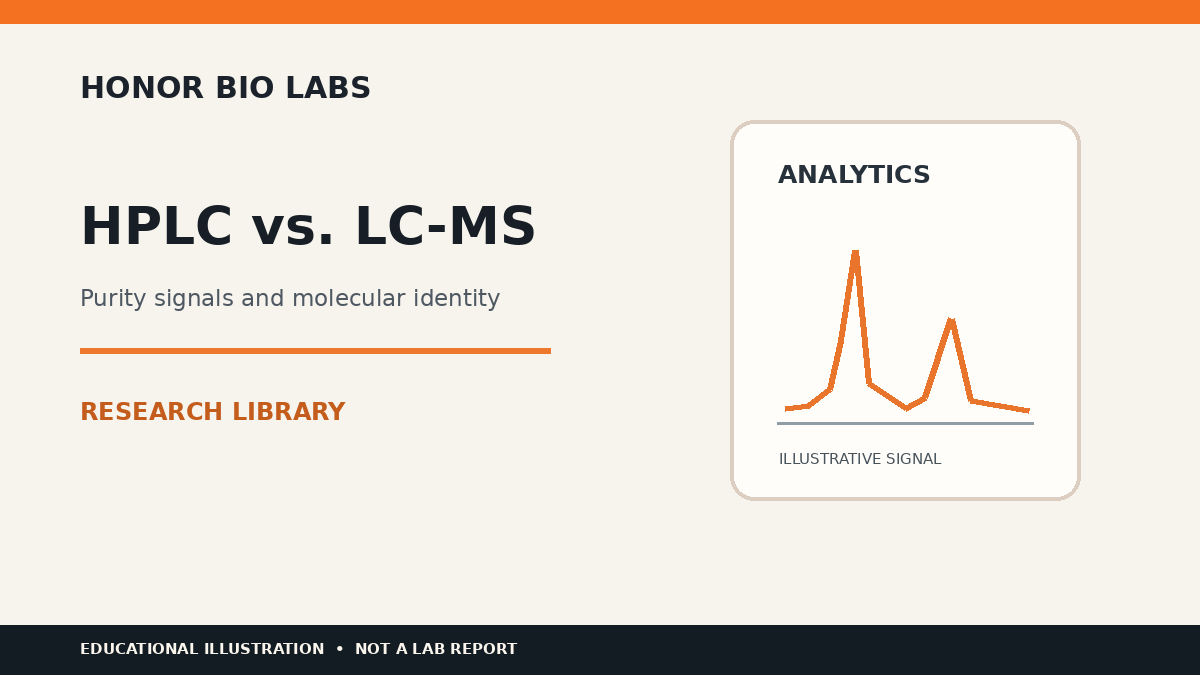
HPLC and LC-MS are often listed together on research-material reports, but they are not interchangeable. Each method provides a different type of information.
What HPLC is used for
High-performance liquid chromatography separates components in a sample. When paired with UV detection, the resulting chromatogram can be used to report the relative area associated with the primary component and other detected peaks. This is commonly presented as chromatographic purity.
That percentage describes the analyzed sample under the reported method. It should not be interpreted as a sterility result or as evidence of suitability for any untested use.
What LC-MS is used for
Liquid chromatography–mass spectrometry combines separation with mass measurement. In research-material testing, mass-spectrometry data can support identification by comparing the observed mass information with what is expected for the compound.
Why the two tests complement each other
Purity and identity are different questions. A chromatogram can show how much of a detected signal is associated with a primary component, while mass-spectrometry data can help assess whether that component is consistent with the expected compound identity.
What neither test automatically establishes
HPLC and LC-MS do not, by themselves, establish sterility, endotoxin status, clinical safety, FDA approval, or suitability for human or veterinary use. Those are separate questions requiring different evidence and, where applicable, different testing.
Read the report as a whole
When reviewing documentation, look at the method, sample identifier, lot information, test date, reported results, and laboratory details together. A single percentage without sample context tells you far less than a complete, matched report.
For more on how Honor Bio Labs presents analytical information, see Quality & Documentation.
Further reading and documentation
For research-material documentation and sourcing terminology, explore related guidance:
Educational content prepared by the Honor Bio Labs editorial team. Illustrations are explanatory, not certificates of analysis or evidence of test results. For laboratory research use only.
Related research resource
Continue with Why Lot-Specific Documentation Matters for Research Materials for additional guidance on research-material documentation and evaluating evidence.
RESEARCH MATERIALS
Explore the catalog.
Browse research materials with clear vial specifications and lot-specific analytical documentation where available.
Browse Peptides